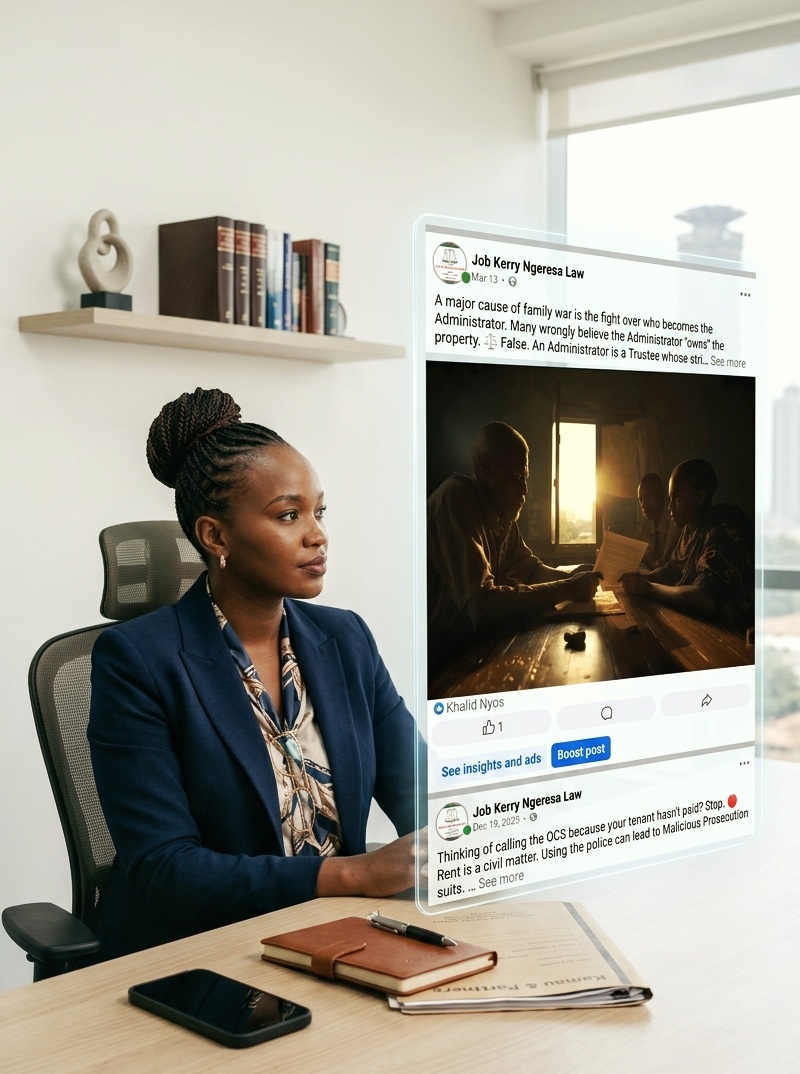
Author: Hamid Focus

  • Google Merchant Center: The Free Google Shopping Visibility Most Kenyan BCP Businesses Skip

    Google Merchant Center: The Free Google Shopping Visibility Most Kenyan BCP Businesses Skip

    Google Merchant Center: The Free Google Shopping Visibility Most Kenyan BCP Businesses Skip

    Businesses, Companies & Production (BCP) · Process & Education

    60bn+products live in Google’s Shopping Graph as of mid-2026
    +50%more clicks when free listings run alongside paid ads

    Say “Google Shopping” to most Kenyan BCP business owners — feed manufacturers, auto parts dealers, packaging suppliers, distributors of every kind — and the reaction is almost always the same:

    “That’s for big online stores. We don’t run an e-commerce site.”

    It’s an understandable assumption. It’s also wrong, and it’s quietly costing product-based businesses across Kenya visibility they could be getting for free. The tool behind Google Shopping — Google Merchant Center — doesn’t require a shopping cart, doesn’t require online checkout, and in its most basic form, doesn’t cost a single shilling to use.

    If your business sells physical products, this is one of the highest-leverage, lowest-cost visibility moves available right now — and almost nobody in the BCP space is using it properly.

    Product catalogue feeding into Google Shopping search results

    What Google Merchant Center Actually Is

    Definition Google Merchant Center is a free platform where businesses submit a structured product feed — a file listing every product with its title, price, availability, and images — that Google uses to power both Google Shopping ads and, critically, free product listings that appear organically across Google Search, the Shopping tab, Google Images, Google Maps, and Google Lens.

    That second part is the piece most Kenyan BCP owners have never heard: Google’s free listings program lets your products appear with photos, pricing, and availability directly in search results — with no ad spend required. Free listings and paid Shopping ads draw from the exact same product feed; the feed is the foundation either way.

    The Standard Assumption vs. the Real Opportunity

    Standard assumption: “Google Shopping is a paid advertising channel for online retailers with e-commerce checkout.”

    Real opportunity: a Merchant Center account with an approved product feed and free listings enabled gets your products showing up — for free — the moment someone searches for what you sell. According to Google Merchant Center’s own program structure, a merchant who creates an account, submits a complete product feed, and enables free listings has spent nothing at all. The cost only appears once you choose to layer paid Shopping campaigns on top.

    $0 spendis required to get your products into Google’s free Shopping tab, Search results, and Google Images listings — the entry point most Kenyan BCP businesses assume doesn’t exist.

    For a Kenyan animal feed manufacturer or auto parts distributor, this means a potential customer searching “dairy meal supplier Kenya” or “Toyota shock absorbers Thika” can see your actual product, price, and photo directly in Google — without you spending a shilling on ads, and without needing a full online store.

    How the Product Feed Works

    The feed is simply a structured file — usually a spreadsheet or automated export — containing one row per product with required fields: title, price, availability, condition, images, and a product identifier. Google’s own product data specification defines exactly what’s needed, and feed quality directly determines whether — and how often — your products get shown.

    What tends to trip businesses up

    • Incomplete or stale data — outdated prices or “out of stock” items left live cause disapprovals or, worse, lost customer trust
    • Weak product titles — generic names instead of the specific terms a buyer would actually search
    • Low-quality images — Google recommends product photos of at least 1,500×1,500 pixels; blurry or watermarked images hurt eligibility
    • Missing shipping or availability details — Google favors listings that clearly state whether a product is in stock and how it’s fulfilled
    1,500×1,500pxis Google’s recommended minimum image size for product listings — a detail most self-managed feeds get wrong first time.

    Free Listings vs. Paid Shopping Ads

    These are two layers of the same system, not competing options:

    • Free listings — organic, unpaid placements in the Shopping tab, Google Images, and Search, ranked by relevance to the search query
    • Paid Shopping ads (via Google Ads) — priority placement in the prominent carousel at the top of search results, charged per click

    Both draw from the same Merchant Center feed. Businesses don’t have to choose one or the other — Google’s own data shows that merchants running free listings alongside paid ads see roughly 50% more clicks and double the impressions compared to paid ads alone.

    The businesses treating Merchant Center as “something for later once we build an online store” are leaving free, immediate visibility on the table right now — visibility their competitors could be claiming instead.
    Kenyan warehouse or retail storeroom with smartphone showing Google product listings

    What This Looks Like for a Kenyan BCP Business

    You don’t need a checkout system to benefit. A feed manufacturer, packaging supplier, or auto parts retailer can submit a product feed listing their catalogue with accurate pricing and “in stock at our location” availability — directing the shopper not to an online payment page, but to a WhatsApp inquiry or a visit, tying directly back into the O2O approach we covered in our last article. The product shows up in Google. The transaction still happens the way it always has — by phone, WhatsApp, or in person.

    2bn+product listings inside Google’s Shopping Graph are refreshed every single hour — a scale most Kenyan BCP businesses aren’t yet visible inside at all.

    Getting Started: What’s Actually Required

    1. Create a Merchant Center account and verify ownership of your business website
    2. Build a primary product feed — even a well-structured spreadsheet works as a starting point
    3. Confirm free listings are enabled — this is on by default for new accounts, but worth checking under Marketing methods
    4. Keep pricing and availability current — stale data is the single biggest cause of disapproved or suppressed listings
    5. Layer in paid Shopping campaigns later — once the feed is clean and free listings are performing, paid placement becomes a scaling decision, not a starting requirement

    How Hamid Focus Builds This In

    For BCP Growth clients with physical product catalogues, Hamid Focus sets up a clean, properly structured Merchant Center feed alongside the core website build — so your products are eligible for free Google visibility from day one, not as an afterthought months later. Paired with the Focus Dashboard, you can see exactly which products are generating impressions and inquiries, and make an informed call on when paid Shopping campaigns are worth adding.

    Have a product catalogue sitting invisible on Google?

    See BCP Growth Pricing & Process

    Frequently Asked Questions

    Do I need an online store to use Google Merchant Center?

    No. A website with clear product pages, pricing, and contact details is enough. Free listings send interested customers to inquire by WhatsApp, phone, or in-person visit rather than requiring online checkout.

    Is Google Merchant Center really free?

    Yes, for the core function. Creating an account, submitting a product feed, and enabling free listings costs nothing. Costs only apply once you link a Google Ads account and run paid Shopping campaigns on top.

    How is this different from just having a Google Business Profile?

    A Google Business Profile shows your business location and details for local search. Merchant Center specifically shows individual products — with photos and prices — inside Google’s Shopping surfaces. The two work well together but serve different purposes.

    What’s the most common reason listings get rejected?

    Incomplete or inaccurate product data — missing images, outdated prices, or unclear availability — is the most frequent cause of disapproval. Keeping the feed current solves most issues.

    Should a BCP business start with free listings or paid ads?

    Free listings first. They cost nothing, establish which products get traction, and give you real performance data to decide whether paid Shopping campaigns are worth the investment later.

  • O2O Marketing in Kenya: Why Your Online Presence Should Be Selling In-Store, Not Just Online

    O2O Marketing in Kenya: Why Your Online Presence Should Be Selling In-Store, Not Just Online

    Businesses, Companies & Production (BCP) · Process & Education

    O2O Marketing in Kenya: Why Your Online Presence Should Be Selling In-Store, Not Just Online

    97%of Kenyan internet users are on WhatsApp — highest in Africa
    60–70%of shoppers research online and offline before buying
    ← swipe for more stats →

    Ask a business owner almost anywhere in Kenya — Thika, Nakuru, Eldoret, Kisumu, it doesn’t matter — why they haven’t invested in a proper website or social presence, and you’ll usually hear some version of the same line:

    “I don’t sell online, so I don’t need it.”

    It’s a reasonable-sounding assumption. It’s also, quite possibly, the single most expensive mistake a Businesses, Companies & Production (BCP) operator can make in 2026 — whether that business sits on a busy Thika highway frontage or a quiet trading centre off the main road.

    Here’s the part that gets missed: your customer has already searched for you before you know they exist. They’ve checked your Google listing, scrolled your Facebook page, or asked a friend to forward your WhatsApp number — and they did all of it on a smartphone, before ever walking through your door. The business that shows up well in that moment gets the sale. The one that doesn’t loses it to a competitor who does, even if that competitor’s product is objectively worse.

    This is what’s known as O2O marketing — and across Kenya, from major towns to smaller trading hubs, the opportunity behind it is bigger than most owners realize.

    Online-to-offline customer journey from smartphone search to in-store visit

    What O2O Actually Means

    Definition O2O — online-to-offline — is a strategy that uses digital channels to bring customers into a physical location or into a direct offline transaction, rather than trying to complete the sale entirely on a website. It is not the same as e-commerce, where the transaction happens end-to-end online, and it’s not the same as generic brand awareness marketing, which has no specific offline action as its goal. O2O has one job: turn a person scrolling their phone into a person walking into your shop, calling your line, or sending a WhatsApp order.

    For manufacturers, distributors, wholesalers, and service providers — the core of the BCP vertical, wherever in Kenya they operate — this is almost always the more realistic and more profitable model than trying to build a full online store from scratch.

    Why This Is a Bigger Opportunity in Kenya Than Most Owners Realize

    Three shifts have quietly changed the math for BCP businesses nationwide over the past two years, and most owners haven’t caught up with what they mean commercially.

    1. The “online” half of O2O is already sitting in every customer’s pocket

    Kenya’s smartphone penetration has climbed sharply nationwide. According to recent Communications Authority figures, smartphones now account for roughly 93 out of every 100 mobile devices connected to local networks, and mobile internet access sits at near-universal levels among smartphone owners across the country. The old objection — “my customers aren’t online” — simply doesn’t hold anymore, whether your customer base is in a major city or a smaller regional town.

    80.8%+of Kenya’s total mobile connections are smartphones, per the Communications Authority of Kenya — and that share keeps rising every quarter.

    2. WhatsApp closes the gap between discovery and inquiry

    Kenya has one of the highest WhatsApp penetration rates on the continent, at around 97% of internet users — the highest of any African market. That matters because WhatsApp Business is the cheapest, fastest bridge between “found your business online” and “spoke to a real person about buying.” A visitor who lands on your Google listing or social page and can tap straight into a WhatsApp chat converts at a completely different rate than one who has to hunt for a landline number or fill out a slow contact form.

    3. Mobile money removed the last friction point

    Mobile money penetration in Kenya now covers nearly the entire adult mobile user base, at close to 98%. The step between “I’ve decided to buy” and “payment is done” has effectively disappeared, nationwide. The instant-gratification appeal that drives shoppers into physical stores — being able to see, negotiate, and walk away with the product immediately — is fully intact in Kenya, and it’s backed by frictionless payment infrastructure that few other markets can match.

    98%mobile money penetration means almost every adult customer in Kenya can complete a transaction the moment they walk in — no separate “online payment step” required.
    The businesses winning right now aren’t the ones with the flashiest websites. They’re the ones whose online presence makes it effortless to take the next offline step — a call, a WhatsApp message, a visit.

    The Standard Assumption vs. the Real Opportunity

    Standard assumption: “Digital marketing is for businesses that sell online.”

    Real opportunity: digital marketing’s actual job for a BCP business is to generate qualified foot traffic, phone calls, and WhatsApp inquiries — not online checkouts. Research from McKinsey & Company, cited by Anchanto, found that 60–70% of shoppers use both online and offline channels while researching a purchase. That means the business that’s easiest to find, verify, and message online has already won half the sale before the customer ever shows up in person — a dynamic that plays out the same whether the buyer is in Nairobi’s industrial area or a county trading centre two hours away.

    63%of shoppers start their buying journey online, per BigCommerce — even when they intend to complete the purchase in a physical location.

    An animal feed distributor doesn’t need a shopping cart. They need a Google Business Profile that shows up when someone searches “animal feed supplier near me,” a website that states stock, pricing tiers, and delivery radius clearly, and a WhatsApp button that turns a curious visitor into a same-day inquiry. The same logic applies to an auto parts retailer, a packaging manufacturer, or a construction supplies wholesaler — different products, identical buying pattern.

    Kenyan business owner checking smartphone in shop or warehouse

    Common Mistakes Kenyan BCP Businesses Make with O2O

    • Treating the website as a brochure, not a bridge — a page that describes the business but gives the visitor no clear next offline step
    • Burying contact details — location, hours, and WhatsApp number should be visible within seconds, not buried on a separate “Contact Us” page
    • Ignoring Google reviews — trust signals matter more, not less, when the goal is getting someone to physically travel to you
    • Assuming rural or peri-urban customers aren’t online — with smartphone and mobile money penetration this high nationwide, that assumption is increasingly outdated everywhere in Kenya

    What O2O Looks Like in Practice for a Kenyan BCP Business

    • Local search visibility — a claimed, accurate, review-active Google Business Profile so you appear for “near me” searches
    • WhatsApp Business as the bridge — one tap from your website or social page straight into a conversation
    • Visible social proof — reviews and testimonials that build enough trust for someone to make the trip to your location
    • Zero-friction basics — clear hours, location, and contact details so nothing stands between “I found you” and “I visited you”

    How Hamid Focus Builds This In

    Every BCP Growth build at Hamid Focus is designed around O2O from the first page, not bolted on afterward. That means WhatsApp-first CTAs placed at natural decision points, Google Business Profile alignment, and a Focus Dashboard that shows you exactly which channel — search, social, or referral — is driving real inquiries, so you can see the online-to-offline bridge working in your own numbers. The full BCP Growth build is completed in 25 days, wherever in Kenya your business operates.

    Ready to turn your online visibility into walk-in customers?

    See BCP Growth Pricing & Process

    Frequently Asked Questions

    Is O2O marketing only for businesses that also sell online?

    No. O2O is built specifically for businesses whose sales happen offline. The goal isn’t to replace in-person transactions — it’s to use online visibility to generate more of them.

    How is O2O different from omnichannel marketing?

    Omnichannel marketing lets customers move freely between online and offline at any stage of the relationship. O2O is narrower and more deliberate: it specifically uses online channels to drive a single outcome — an offline visit, call, or transaction.

    Does O2O work outside Kenya’s major cities?

    Yes. Smartphone, WhatsApp, and mobile money penetration are all high nationwide, not just in Nairobi or other major urban centres, so the same O2O principles apply to businesses in smaller towns and trading centres.

    How do I know if my website is actually driving in-store visits?

    You track it. A Focus Dashboard setup shows which pages, searches, and social posts lead to WhatsApp inquiries or calls, so you can see the connection between your online presence and offline foot traffic instead of guessing.

    What’s the fastest way to start with O2O if I have no online presence at all?

    Start with a claimed and accurate Google Business Profile and a WhatsApp Business number, then build a website that makes both easy to find. That sequence alone captures most of the near-term opportunity.

  • Blue Ocean Strategy for Law Firms: How Kenyan Firms Create Their Own Space Instead of Competing on Price

    Blue Ocean Strategy for Law Firms: How Kenyan Firms Create Their Own Space Instead of Competing on Price

    Blue Ocean Strategy for Law Firms

    Most law firms in Kenya are not struggling because of a lack of legal skill.

    They are struggling because they operate in crowded, indistinguishable spaces.

    Many firms offer similar services, describe themselves in similar terms, and present themselves with little structural difference. To a potential client, they appear interchangeable. When that happens, the only remaining basis for comparison is often price.

    This is the reality of competition in the legal market today. It is not always aggressive, but it is constant and subtle. It shows up in fee negotiations, delayed decisions, and clients who hesitate because they cannot clearly distinguish one firm from another.

    Market Observation:When law firms look and sound the same, clients compare them on what is easiest to measure. That is usually cost, not competence.

    This is where strategic thinking becomes necessary. Not louder marketing, not more visibility, but a clearer position.

    Understanding Blue Ocean Strategy

    The concept of Blue Ocean Strategy provides a useful framework for this shift.

    Originally developed through research into strategic moves across industries, the idea is simple: instead of competing in crowded markets, organisations can create new or less contested spaces where competition becomes less relevant. Learn more about the framework.

    This approach is built on what is called value innovation, where a firm increases value for its audience while reducing unnecessary complexity or cost. Read about value innovation.

    The contrast is often described as “red ocean” versus “blue ocean.” In a red ocean, firms compete in the same space, using similar approaches, often leading to pressure on pricing and differentiation. In a blue ocean, a firm defines its own space by being clearer, more relevant, and easier to understand. See the distinction.

    Harvard Business Review makes the point directly: competing in overcrowded industries is rarely a path to sustained growth. The stronger approach is to create uncontested market space where comparison becomes less important. Read the HBR article.

    What This Means for Law Firms

    Law firms do not create a blue ocean by inventing a new type of law.

    They create it by becoming clearer than the firms around them.

    This clarity appears in several ways. It appears in how a firm defines its audience. It appears in how it explains its services. It appears in how it structures its communication and presents its identity.

    A firm that is easier to understand is easier to trust. A firm that is easier to trust is easier to choose.

    This is not theory. It reflects how modern clients behave. Research shows that buyers expect clear, seamless experiences and will disengage when the process feels complicated or uncertain. See McKinsey insights.

    Strategic Insight:For law firms, differentiation is not about saying more. It is about making your firm easier to understand than competitors.

    Why Most Firms Remain in the Red Ocean

    Many firms do not intentionally choose to compete in crowded spaces. It happens gradually.

    They attempt to serve a wide audience. They describe their services in broad terms. They adopt language that sounds professional but reveals little. Over time, they become one of many similar options.

    Without a clear structure, even strong legal capability becomes difficult for a client to recognize.

    This is why firms often rely heavily on referrals. Not because referrals are ideal, but because the firm’s public identity is not strong enough to stand on its own.

    The Blue Ocean Moves for Law Firms

    Learn how Kenyan law firms can apply Blue Ocean Strategy to stand out, build trust, and avoid competing on price.

    Applying Blue Ocean Strategy in legal practice does not require radical change. It requires disciplined clarity.

    Sharpen the audience. A firm does not need to serve everyone. It needs to be clearly relevant to a defined group of clients.

    Sharpen the problem. Instead of broad categories like “commercial law,” the firm should communicate specific problems it understands and solves.

    Sharpen the presentation. A consistent domain, structured website, and clean documentation create a unified signal of professionalism. For more on this, see law firm branding standards.

    Sharpen the experience. The client should not have to guess what happens next. Clear communication reduces uncertainty and builds confidence.

    Sharpen the content. Educational content allows the firm to demonstrate its thinking without making promotional claims. This builds what can be described as discovery equity.

    Practical Outcome:When these elements align, the firm becomes easier to choose. Not because it is louder, but because it is clearer.

    Blue Ocean Is Not About Being Different for Its Own Sake

    There is a common misunderstanding that differentiation means standing out visually or sounding unusual.

    This is not the case.

    Blue Ocean Strategy is grounded in value innovation. The goal is not to appear different, but to be more useful and more precise. Understand the principle.

    For law firms, this means removing confusion, not adding personality. It means reducing friction, not increasing attention-seeking behavior.

    The Kenyan Context

    In Kenya, many capable law firms remain under-recognized because they operate within the same visible patterns as everyone else.

    A small firm with clear identity, structured communication, and consistent presentation can position itself as a specialized boutique rather than a “small practice.”

    This shift does not require breaking ethical rules. It requires applying them with discipline.

    Compliance and Professional Integrity

    Blue Ocean positioning must remain within the boundaries of legal ethics.

    Firms cannot claim to be the best. They cannot make guarantees. They cannot solicit work aggressively.

    However, they can be clear. They can be structured. They can be consistent.

    Those elements alone are often enough to create meaningful differentiation.

    What This Means Going Forward

    The choice facing most law firms is not whether to compete.

    It is how to compete.

    They can continue operating in crowded spaces where comparison is constant, or they can build a position that reduces the need for comparison entirely.

    That position is built through clarity, structure, and disciplined communication.

    If your firm is ready to move in that direction, begin by defining your structure clearly.

    Start with the brand questionnaire.

  • The Architecture of Verbal Authority: How Law Firms Signal Trust Through Clear Communication

    The Architecture of Verbal Authority: How Law Firms Signal Trust Through Clear Communication

    The Architecture of Verbal Authority

    Law firms are often judged long before a client meets the advocate, signs an engagement letter, or enters the office.

    They are judged by how they sound.

    The wording of an email. The structure of a website. The tone of a proposal. The clarity of a fee note. The way a firm explains itself in conversation. These are not small matters. They shape whether the firm feels precise, stable, and trustworthy.

    That is the foundation of verbal authority.

    Verbal authority is not about speaking loudly or using impressive vocabulary. It is about communicating in a way that feels clear, disciplined, and dependable. In the legal profession, that matters because clients are not only buying legal knowledge. They are buying confidence.

    Recent client-behavior research supports this. Clio’s 2025 report says legal consumers now expect seamless, transparent, and efficient experiences, while many firms still struggle with outdated tools and limited systems. Read the report.

    McKinsey’s B2B research points in the same direction: buyers increasingly expect a smooth experience across multiple channels and are willing to walk away if the journey is not easy enough. See the research.

    Market Reality:

    If your firm sounds unclear, scattered, or overly complicated, clients may assume your internal systems are the same. In professional services, tone is not separate from trust. It is part of it.

    That is why verbal authority should be treated as an operational standard, not a writing style preference.

    For the structural side of this argument, see our article on law firm branding standards, which explains how identity and presentation work together.

    The Three Layers of Verbal Authority

    Verbal authority rests on three things: clarity, consistency, and restraint.

    1. Clarity

    Clear language tells the client that the firm understands the issue and can explain it properly.

    That does not mean oversimplifying serious matters. It means avoiding unnecessary noise. A client should be able to understand what the firm does, who it serves, and what the next step is without decoding jargon.

    2. Consistency

    Every public-facing touchpoint should sound like the same firm.

    The tone of your website, email signature, proposal, and client update should not feel like they were written by different people with different priorities. Consistency creates recognition. Recognition creates familiarity. Familiarity supports trust.

    3. Restraint

    Restraint is what makes the communication feel credible.

    Law firms do not need exaggeration. They do not need dramatic promises. They do not need to sound more important than they are. They need to sound careful, composed, and sure of what they can deliver.

    Professional Insight:

    In a legal market shaped by trust, the strongest message is often the one that is easiest to understand. A precise firm sounds more confident than a noisy one.

    Harvard Business Review’s trust framing is useful here: communication is not the core issue by itself; trust is. Read the article.

    That is why the architecture matters. You are not just choosing words. You are choosing the level of certainty your firm projects.

    For the practical system that turns this into brand inputs, see our questionnaire.

    Hamid Focus Law firms

    Where Verbal Authority Shows Up

    A law firm’s verbal authority appears in the small places most firms overlook.

    • Email: Are your messages brief, respectful, and clear?
    • Website: Does your homepage explain the firm without clutter?
    • Proposals: Do you speak in structured points or vague paragraphs?
    • Intake: Does the client know what happens next?
    • Updates: Do your communications reduce anxiety or increase it?

    This is where many firms lose authority without noticing.

    A poorly written email can undo a polished logo. A confusing proposal can weaken a strong website. A vague intake message can make a firm feel less organised than it really is. Verbal authority is not separate from brand identity. It is one of its strongest proofs.

    What This Means for Your Firm:

    If a new client cannot quickly understand your message, they may not trust your process. In a crowded market, clarity is not a soft skill. It is a competitive advantage.

    To build that advantage, your firm should standardise how it speaks across every channel. That includes templates for first contact, a consistent tone for emails, a clear way of explaining services, and a disciplined structure for all external writing.

    The firms that do this well feel easier to trust. The ones that do not feel harder to choose.

    If your firm is ready to build stronger verbal authority, start with the brand questionnaire and use it to sharpen your identity, messaging, and communication systems.

    Start here.

  • The Reality of Law Firm Marketing in Kenya: From Ignorance to Opportunity

    The Reality of Law Firm Marketing in Kenya: From Ignorance to Opportunity

    The New Professionalism: Mastering Law Firm Marketing Compliance in Kenya

    Law Firms · Marketing Compliance

    For decades, the Kenyan advocate operated in a world of strategic silence. Under the 1967 Advocates (Practice) Rules, marketing was not just discouraged; it was effectively criminalised. Rule 2 of that era famously forbade any act “calculated to unfairly attract professional business.” This created a culture of referral dependency, where a firm’s growth was limited to the physical reach of its partners’ handshakes.

    The 2010 Constitution and the subsequent 2014 legal reforms recognised a fundamental shift: Access to Justice requires Access to Information. The watershed moment arrived with Legal Notice 42 of 2014 — the Marketing and Advertising Rules. For the first time, Kenyan advocates were granted the right to be visible. That right came with a specific burden: the burden of Institutional Dignity.

    “Professional Standards are your firm’s greatest competitive advantage.”

    At Hamid Focus, we view compliance as the ultimate trust signal. When your firm’s branding, website, and messaging are perfectly aligned with LSK standards, you aren’t just “following the law” — you are signalling to high-value clients that your internal operations are rigorous and beyond reproach.

    Modest law firm desk with compliance booklet

    § 1Understanding the Limits: What Is Allowed?

    Definition Navigating the LSK SOPPEC (2017) and the 2014 Rules requires distinguishing between Information and Solicitation. Law firm marketing in Kenya is strictly “Informative” by design. Any attempt to be “Persuasive” through hype or promises is a step toward professional misconduct.

    § 2Firm Naming & Branding

    The “Narrative of the Name” is strictly regulated. Under Rule 10 of the Practice Rules, firm names must typically be derived from current or former partners. Trade names like “Justice Eagles Law Firm” or “Mombasa Corporate Giants” are generally prohibited as they are considered misleading or undignified. Your branding must use your professional name, signalling personal accountability rather than a manufactured commercial identity.

    This is a meaningful constraint compared to almost any other regulated profession in Kenya — even accountancy and medicine allow more branding latitude. It also explains why so much of a Kenyan law firm’s differentiation has to come from tone, clarity, and structure rather than a catchy name.

    § 3Website & Digital Content — The “Boardroom” Standard

    Your website is permitted under Rule 7, but its content is restricted to factual data:

    • Name, admission year, and academic qualifications
    • Address, business hours, and languages spoken
    • Areas of practice, stated factually
    • Client testimonials or named clients (without specific LSK-approved circumstances)
    • Photos of advocates in undignified poses
    • Guarantees of success or outcome-based claims

    § 4Social Media & the Institutional Voice

    Standard 10 of the SOPPEC specifically addresses social media, warning that inappropriate use that undermines the dignity of the profession is misconduct. Your “Institutional Voice” on LinkedIn and X must be objective and true — you are an officer of the court 24 hours a day, and your digital presence must reflect that weight.

    This is a large enough topic that it deserves its own treatment. For the complete breakdown of platform-by-platform rules, tone standards, and risk areas, see our dedicated piece: The Social Signal: Social Media Integrity and Compliance for Law Firms in Kenya.

    § 5Data Protection & Consent

    Marketing compliance for Kenyan law firms doesn’t stop at the LSK’s rules. The Data Protection Act (2019) governs how you collect and use any personal data gathered through digital marketing — email newsletters included.

    Consent is not optional. Any digital marketing that relies on a prospect’s personal data — such as email newsletters or a WhatsApp broadcast list — requires express, informed consent (opt-in). Mass-emailing potential clients without a prior relationship is not just a breach of LSK rules; it is a separate violation of national data privacy law, enforceable by the Office of the Data Protection Commissioner.

    § 6Fees, Guarantees & the Remuneration Order

    Kenyan advocates cannot compete on price the way a retailer can. The Advocates (Remuneration) Order sets minimum fee scales for most non-contentious work, and charging below that scale — “undercutting” — is a defined offence under Section 36 of the Advocates Act, separate from and in addition to any LSK marketing breach.

    What’s at stake. Offences under the Advocates Act carry penalties of a fine of up to KES 100,000 or imprisonment of up to two years, while the LSK Disciplinary Tribunal can separately admonish, suspend, strike an advocate off the roll, impose a fine of up to KES 50,000, and order compensation to a complainant of up to KES 5 million. Marketing that promises “discounted fees” or a “guaranteed win” risks triggering both tracks at once.
    Law firm brand strategy documents on a desk

    § 7Forbidden Channels

    Dignity extends to the medium, not just the message. Radio, television, and illuminated billboards are explicitly forbidden channels for advocate marketing in Kenya, regardless of how factual the content within them might be. Approved visibility runs through your website, print, dignified signage, and professional digital presence — not mass broadcast advertising.

    Why Advocates Are Not Retailers

    The core difference between law firm marketing and standard business marketing is the standard of trust. While a retailer might use flash sales, outcome guarantees, or client reviews to drive volume, an advocate relies on reputation.

    Standard BusinessLaw Firm (Kenya)
    Uses testimonials to prove valueTestimonials are prohibited; value is proven through educational positioning and authoritative insight
    Can offer discounts and “no-win-no-fee” guaranteesUndercutting the Remuneration Order or guaranteeing success is professional misconduct
    Can use aggressive “Call Now” buttons and billboardsMarketing must be dignified — radio, television, and illuminated billboards are explicitly forbidden

    This “strategic gravity” is what we build at Hamid Focus. We don’t use hacks or hype. We implement a 4-step process that turns compliance into a signal of high-status authority. By leading with helpfulness and sticking to the facts, you build a firm that doesn’t just attract clients — it attracts respect. For the broader thinking behind why this approach outperforms conventional marketing for legal practices, see The Reality of Law Firm Marketing in Kenya.

    Reclaim your firm’s narrative with confidence.

    Take the 7-Minute Brand Strategy Questionnaire

    Frequently Asked Questions

    Can a Kenyan law firm use a trade name instead of partners’ names?

    Generally no. Rule 10 requires firm names to derive from current or former partners. Invented trade names are typically viewed as misleading or undignified under the Practice Rules.

    Are client testimonials ever allowed on a law firm website?

    Only in narrow, LSK-approved circumstances. As a default, testimonials and named client references are prohibited under Rule 7’s factual-data standard.

    What happens if a firm violates these marketing rules?

    Violations can trigger LSK disciplinary action — admonishment, suspension, striking off the roll, and fines — separate from any penalties under the Advocates Act for related issues like undercutting fees.

    Can a law firm run paid digital ads?

    Factual, dignified digital presence is permitted, but persuasive or promotional advertising — and forbidden channels like radio, TV, and illuminated billboards — are not.

    Is email marketing to prospective clients allowed?

    Only with express, informed consent under the Data Protection Act. Mass-emailing people without a prior relationship breaches both data privacy law and LSK marketing standards.

    Sources:

    Law Society of Kenya — Advocates (Practice) Rules
    Kenya Law — Legal Notice 42 of 2014 (Marketing and Advertising Rules)
    Kenya Law — Legal Notice 43 of 2014 (Advocates Remuneration Order)
    Law Society of Kenya — SOPPEC (2017) Code of Conduct
    Office of the Data Protection Commissioner — Data Protection Act (2019) & Regulations

  • The New Professionalism: Mastering Law Firm Marketing Compliance in Kenya

    The New Professionalism: Mastering Law Firm Marketing Compliance in Kenya

    For decades, the Kenyan advocate operated in a world of strategic silence. Under the 1967 Advocates (Practice) Rules, marketing was not just discouraged; it was effectively criminalized. Rule 2 of the era famously forbade any act “calculated to unfairly attract professional business.” This created a culture of “referral dependency,” where a firm’s growth was limited to the physical reach of its partners’ handshakes.However, the 2010 Constitution and the subsequent 2014 legal reforms recognized a fundamental shift: Access to Justice requires Access to Information. The watershed moment arrived with Legal Notice 42 of 2014 (The Marketing and Advertising Rules). For the first time, Kenyan advocates were granted the right to be visible. But this right came with a specific burden: the burden of Institutional Dignity.At Hamid Focus, we view compliance as the ultimate trust signal. When your firm’s branding, website, and messaging are perfectly aligned with LSK standards, you aren’t just “following the law”—you are signaling to high-value clients that your internal operations are rigorous and beyond reproach. Professional Standards are your firm’s greatest competitive advantage.

    Understanding the Limits: What is Allowed?

    Navigating the LSK SOPPEC (2017) and the 2014 Rules requires distinguishing between Information and Solicitation. Law firm marketing in Kenya is strictly “Informative” by design. Any attempt to be “Persuasive” through hype or promises is a step toward professional misconduct.

    1. Firm Naming & Branding (Rule 10 & 10A)

    The “Narrative of the Name” is strictly regulated. Under Rule 10 of the Practice Rules, firm names must typically be derived from current or former partners. Trade names like “Justice Eagles Law Firm” or “Mombasa Corporate Giants” are generally prohibited as they are considered misleading or undignified. Your branding must use your professional name, signaling personal accountability.

    2. Website & Digital Content (The “Boardroom” Standard)

    Your website is permitted under Rule 7, but its content is restricted to factual data:

    • Permitted: Name, admission year, academic qualifications, address, business hours, and languages spoken.
    • Prohibited: Client testimonials, names of clients (without specific LSK-approved circumstances), photos of advocates in undignified poses, and guarantees of success.

    3. Social Media & The “Social Signal” (SOPPEC-10)

    Standard 10 of the SOPPEC specifically addresses social media. It warns that inappropriate use of social media that undermines the dignity of the profession is misconduct. This means your “Institutional Voice” on LinkedIn and X must be objective and true. You are an officer of the court 24/7; your digital presence must reflect that weight.According to the Data Protection Act (2019), any digital marketing—such as email newsletters—requires express, informed consent (Opt-in). Mass-emailing potential clients without a prior relationship is not just a breach of LSK rules; it is a violation of national data privacy laws.

    Why Advocates are Not Retailers

    The core difference between law firm marketing and standard business marketing is The Standard of Trust. While a retailer might use “flash sales,” “outcome guarantees,” or “client reviews” to drive volume, an advocate relies on Reputation.The Comparison Table:

    • Standard Business: Uses testimonials to prove value. | Law Firm: Testimonials are prohibited; value is proven through Educational Positioning and authoritative insights.
    • Standard Business: Can offer discounts and “no-win-no-fee” guarantees. | Law Firm: Undercutting the Remuneration Order or making success guarantees is professional misconduct.
    • Standard Business: Can use aggressive “Call Now” buttons and billboards. | Law Firm: Marketing must be “dignified.” Radio, Television, and illuminated billboards are explicitly forbidden.

    This “Strategic Gravity” is what we build at Hamid Focus. We don’t use “hacks” or “hype.” We implement a 4-Step Process that turns compliance into a signal of high-status authority. By leading with helpfulness and sticking to the facts, you build a firm that doesn’t just attract clients—it attracts respect.Reclaim your firm’s narrative with confidence.Take the 7-Minute Brand Strategy QuestionnaireFor a calm discussion regarding your firm’s compliance standards:WhatsApp Inquiry: +254 752 110 037

  • The Identity Standard: Law Firm Branding Standards for Kenyan Firms

    The Identity Standard: Law Firm Branding Standards for Kenyan Firms

    Law Firm Branding Standards in Kenya

    New and growing law firms in Kenya often face a quiet but serious challenge: they are judged not only by the quality of their legal work, but by how stable and organised they appear.

    When a client seeks legal counsel, especially in a high-value matter, they are not simply asking, “Is this lawyer skilled?” They are also asking, even if silently, “Will this firm still be here, organised, and dependable when I need it most?”

    That is the real issue.

    Many practitioners assume branding is a luxury reserved for large international firms with big budgets. They imagine logos, bright colours, and marketing slogans. That is a narrow view, and in the legal profession it is the wrong one.

    For law firms, branding is not decoration. It is a system of standards that communicates order, professionalism, and reliability. It is the structure behind the public image. It is the difference between a firm that looks temporary and a firm that looks institutional.

    This matters because the legal market runs on trust. If your firm appears disorganised, clients may question whether your internal systems are strong enough to handle their file, their transaction, or their dispute. If your firm appears structured, clear, and consistent, you reduce doubt before the first meeting even begins.

    For related context, see our article on law firm marketing compliance in Kenya, which explains the ethical boundary that shapes all public-facing communication.

    Market Reality:

    Modern legal clients expect seamless and transparent interactions across every touchpoint, from first contact to final engagement. Research from Clio Legal Trends Report shows that firms relying on outdated or inconsistent systems are at a disadvantage when it comes to building trust and converting new clients.

    Branding Is a Professional Standard, Not a Creative Extra

    A law firm’s brand is not just its logo. It is the full set of signals it sends to the public through its name, email addresses, website, documents, typography, colours, and tone of communication.

    In practical terms, branding tells a client whether your firm is operating with discipline.

    A generic email address, inconsistent document formatting, or a low-resolution logo may seem small, but together they create a strong impression: the firm has not yet developed internal order. That impression matters. Clients often equate outward order with internal competence.

    This is why law firm branding standards are so important. They help transform a firm from a loose collection of individuals into a structured legal institution. They remove uncertainty. They create coherence. And they make your firm easier to trust.

    The First Standard: Professional Communication

    Professionalism begins long before a client enters your office. It begins with the first email, the first document, and the first point of contact.

    In the Kenyan market, many firms still use generic email providers such as Gmail, Yahoo, or iCloud for official communication. This is common, but it sends the wrong signal. It can make a firm appear temporary, informal, or incomplete.

    A custom domain is the first serious branding standard any growing law firm should adopt.

    An email such as advocate@yourfirm.co.ke does more than look polished. It creates consistency. It helps protect firm communications. It separates personal identity from institutional identity. And it tells the client that this is a real practice with its own infrastructure.

    The same principle applies to email signatures. Every member of the firm should use a standard format. Keep it clean, text-based, and uniform. Do not overload it with unnecessary graphics. The goal is clarity, not noise.

    The Visual Language of Authority

    Once communication is standardised, the next step is visual identity.

    This is where many firms go wrong. They treat visual identity as a logo exercise. In reality, it is a full visual language made up of typography, colour choices, spacing, document layout, and image style.

    For law firms, the visual language should communicate stability, seriousness, and confidence. Traditional colours such as navy blue, charcoal, deep green, burgundy, or warm neutrals often work well because they suggest weight and professionalism. But the real point is not the colour itself. The real point is consistency.

    The same colours should appear across your website, letterheads, business cards, invoices, proposals, and email banners. The typography should also be consistent. Choose one font for headings and one for body text. Both should be highly legible and suitable for both digital and print use.

    The Three-Step Sequence

    If you want to build a law firm brand that is credible and scalable, follow the sequence below. Do not reverse the order.

    1. Secure your professional domain and email.
    2. Develop a cohesive visual system.
    3. Build the digital anchor website.

    Your website is not an advertisement. It is a digital office. For many clients, it is the first room they enter. It should feel clean, calm, fast, and informative.

    Current market research supports this emphasis on seamless and transparent experience. Clio’s 2025 solo and small firm report notes that legal consumers expect seamless experiences, transparency, and efficiency, while many firms still struggle with outdated tools. That aligns directly with the need for structured identity and clear client-facing systems. 2

    Professional Insight:

    This reflects a broader shift in professional services. Insights from McKinsey & Company show that clients are more likely to choose service providers who offer clarity, consistency, and ease of engagement across multiple channels.

    For the questionnaire that turns these standards into practical brand inputs, see our law firm brand questionnaire.

    Brand + Online

    Compliance and Long-Term Identity Strategy

    Kenyan law firms must be careful about how they present themselves. The rules around legal marketing and professional conduct do not permit touting, false claims, or comparative superiority. Under the Advocates (Marketing and Advertising) Rules, advertising must be objective, true, dignified, respectful of professional ethics, and not denigrate another advocate or the profession. The older Advocates (Practice) Rules also prohibit conduct that can reasonably be regarded as touting or advertising to unfairly attract business. 3

    That is not a weakness. It is a boundary that encourages a better kind of branding.

    You do not need to claim that your firm is the best. You do not need exaggerated promises. You do not need noise.

    What you can do is present your firm with clarity, dignity, and professionalism.

    That is exactly what branding standards help you do.

    When your identity is structured, your communication is consistent, and your presentation is disciplined, you remain on the right side of compliance while still building a strong public presence.

    In that sense, high branding standards are not in conflict with legal ethics. They support them.

    Your Branding Standards Checklist

    • a professional custom domain and firm email addresses
    • a clean and legible logo
    • a consistent colour palette
    • standard document templates
    • a uniform email signature
    • a mobile-friendly website with clear contact channels

    These are not extras. They are the minimum standards of a serious modern practice.

    Compliance Note (Kenya):

    Legal marketing in Kenya must remain objective, truthful, and dignified. Under the Advocates (Marketing and Advertising) Rules, 2014 , advocates are prohibited from making misleading claims, engaging in comparative advertising, or using any form of touting to attract clients.

    Final Thought

    Branding is a promise.

    It is the promise that your firm is organised, clear, and prepared. It is the promise that your work will be carried by a structure worthy of the client’s trust.

    For new and growing law firms in Kenya, this is not a soft issue. It is a strategic one.

    If your legal skill is strong but your presentation is inconsistent, you are leaving trust on the table. If your identity is standardised, your firm becomes easier to recognise, easier to trust, and easier to choose.

    That is how a law firm moves from informal visibility to institutional credibility.

    What This Means for Your Firm:

    If your firm uses inconsistent branding, generic email addresses, or has no clear online presence, you are not just missing visibility—you are reducing client confidence before the first interaction even begins. In professional services, perception directly influences trust, and trust influences client choice.

    If you are ready to align your firm with these standards, complete our brief questionnaire and receive a complimentary 1-page Brand Strategy.