Google Merchant Center: The Free Google Shopping Visibility Most Kenyan BCP Businesses Skip
Businesses, Companies & Production (BCP) · Process & Education
Say “Google Shopping” to most Kenyan BCP business owners — feed manufacturers, auto parts dealers, packaging suppliers, distributors of every kind — and the reaction is almost always the same:
It’s an understandable assumption. It’s also wrong, and it’s quietly costing product-based businesses across Kenya visibility they could be getting for free. The tool behind Google Shopping — Google Merchant Center — doesn’t require a shopping cart, doesn’t require online checkout, and in its most basic form, doesn’t cost a single shilling to use.
If your business sells physical products, this is one of the highest-leverage, lowest-cost visibility moves available right now — and almost nobody in the BCP space is using it properly.
What Google Merchant Center Actually Is
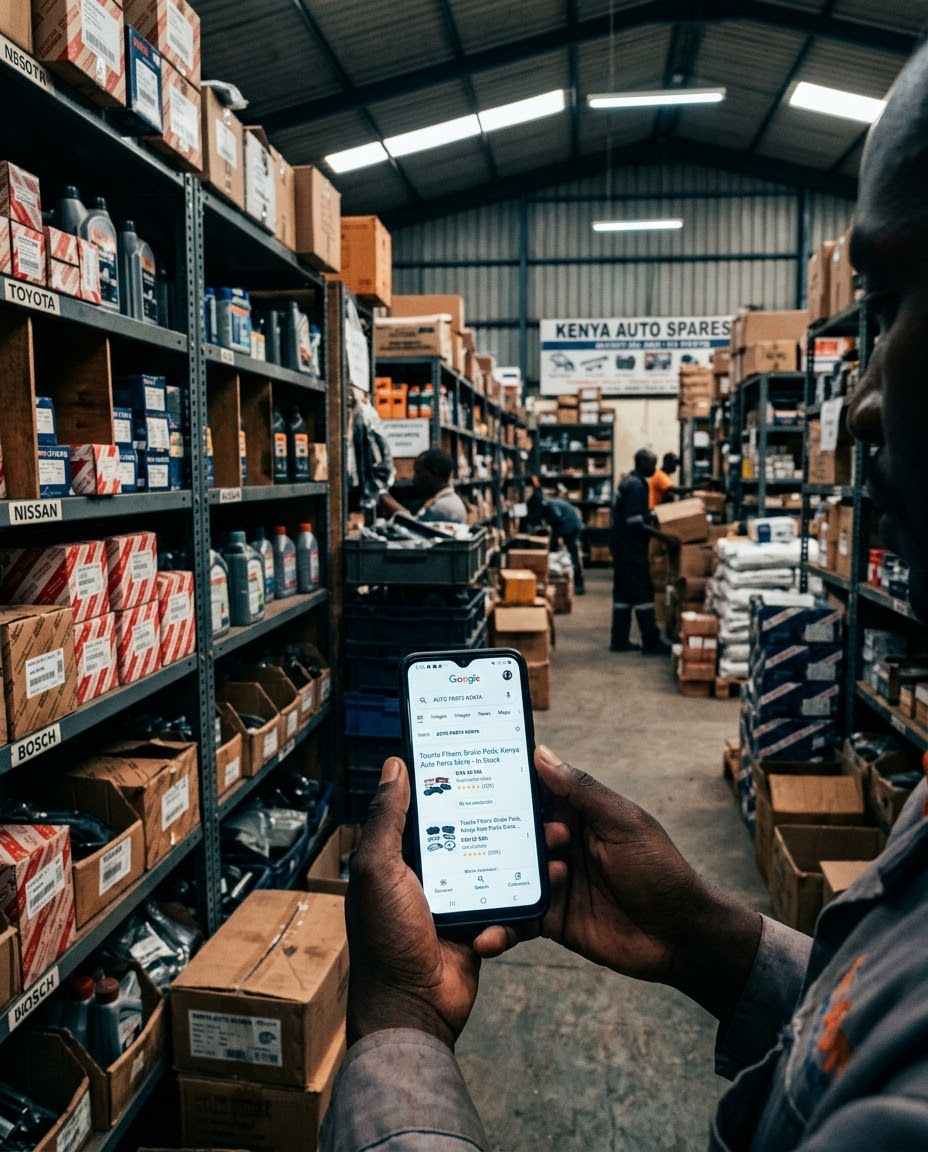
That second part is the piece most Kenyan BCP owners have never heard: Google’s free listings program lets your products appear with photos, pricing, and availability directly in search results — with no ad spend required. Free listings and paid Shopping ads draw from the exact same product feed; the feed is the foundation either way.
The Standard Assumption vs. the Real Opportunity
Standard assumption: “Google Shopping is a paid advertising channel for online retailers with e-commerce checkout.”
Real opportunity: a Merchant Center account with an approved product feed and free listings enabled gets your products showing up — for free — the moment someone searches for what you sell. According to Google Merchant Center’s own program structure, a merchant who creates an account, submits a complete product feed, and enables free listings has spent nothing at all. The cost only appears once you choose to layer paid Shopping campaigns on top.
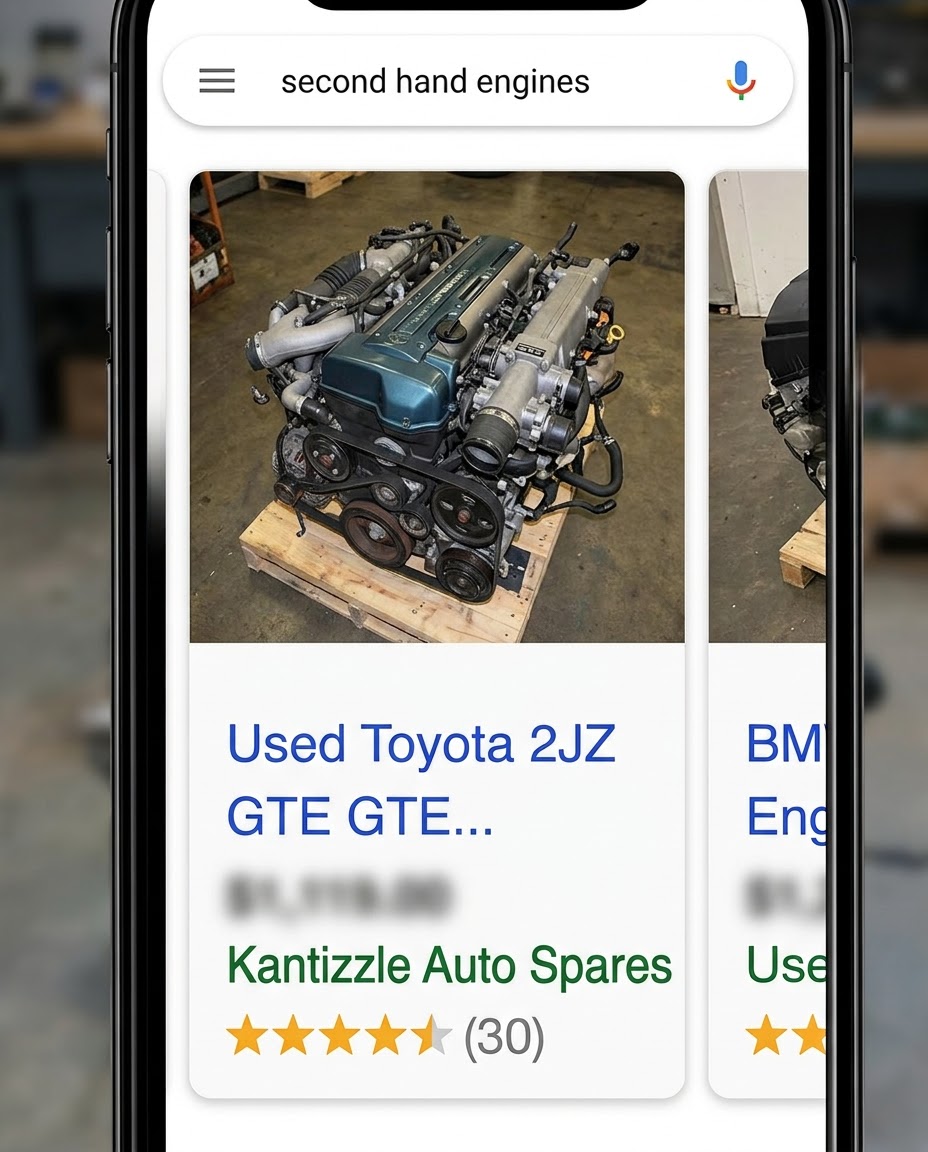
For a Kenyan animal feed manufacturer or auto parts distributor, this means a potential customer searching “dairy meal supplier Kenya” or “Toyota shock absorbers Thika” can see your actual product, price, and photo directly in Google — without you spending a shilling on ads, and without needing a full online store.
How the Product Feed Works
The feed is simply a structured file — usually a spreadsheet or automated export — containing one row per product with required fields: title, price, availability, condition, images, and a product identifier. Google’s own product data specification defines exactly what’s needed, and feed quality directly determines whether — and how often — your products get shown.
What tends to trip businesses up
- Incomplete or stale data — outdated prices or “out of stock” items left live cause disapprovals or, worse, lost customer trust
- Weak product titles — generic names instead of the specific terms a buyer would actually search
- Low-quality images — Google recommends product photos of at least 1,500×1,500 pixels; blurry or watermarked images hurt eligibility
- Missing shipping or availability details — Google favors listings that clearly state whether a product is in stock and how it’s fulfilled
Free Listings vs. Paid Shopping Ads
These are two layers of the same system, not competing options:
- Free listings — organic, unpaid placements in the Shopping tab, Google Images, and Search, ranked by relevance to the search query
- Paid Shopping ads (via Google Ads) — priority placement in the prominent carousel at the top of search results, charged per click
Both draw from the same Merchant Center feed. Businesses don’t have to choose one or the other — Google’s own data shows that merchants running free listings alongside paid ads see roughly 50% more clicks and double the impressions compared to paid ads alone.
What This Looks Like for a Kenyan BCP Business
You don’t need a checkout system to benefit. A feed manufacturer, packaging supplier, or auto parts retailer can submit a product feed listing their catalogue with accurate pricing and “in stock at our location” availability — directing the shopper not to an online payment page, but to a WhatsApp inquiry or a visit, tying directly back into the O2O approach we covered in our last article. The product shows up in Google. The transaction still happens the way it always has — by phone, WhatsApp, or in person.
Getting Started: What’s Actually Required
- Create a Merchant Center account and verify ownership of your business website
- Build a primary product feed — even a well-structured spreadsheet works as a starting point
- Confirm free listings are enabled — this is on by default for new accounts, but worth checking under Marketing methods
- Keep pricing and availability current — stale data is the single biggest cause of disapproved or suppressed listings
- Layer in paid Shopping campaigns later — once the feed is clean and free listings are performing, paid placement becomes a scaling decision, not a starting requirement
How Hamid Focus Builds This In
For BCP Growth clients with physical product catalogues, Hamid Focus sets up a clean, properly structured Merchant Center feed alongside the core website build — so your products are eligible for free Google visibility from day one, not as an afterthought months later. Paired with the Focus Dashboard, you can see exactly which products are generating impressions and inquiries, and make an informed call on when paid Shopping campaigns are worth adding.
Have a product catalogue sitting invisible on Google?
See BCP Growth Pricing & ProcessFrequently Asked Questions
Do I need an online store to use Google Merchant Center?
No. A website with clear product pages, pricing, and contact details is enough. Free listings send interested customers to inquire by WhatsApp, phone, or in-person visit rather than requiring online checkout.
Is Google Merchant Center really free?
Yes, for the core function. Creating an account, submitting a product feed, and enabling free listings costs nothing. Costs only apply once you link a Google Ads account and run paid Shopping campaigns on top.
How is this different from just having a Google Business Profile?
A Google Business Profile shows your business location and details for local search. Merchant Center specifically shows individual products — with photos and prices — inside Google’s Shopping surfaces. The two work well together but serve different purposes.
What’s the most common reason listings get rejected?
Incomplete or inaccurate product data — missing images, outdated prices, or unclear availability — is the most frequent cause of disapproval. Keeping the feed current solves most issues.
Should a BCP business start with free listings or paid ads?
Free listings first. They cost nothing, establish which products get traction, and give you real performance data to decide whether paid Shopping campaigns are worth the investment later.
Sources:
Google Merchant Center Help — Free listings for products
MB Advertising Agency — How Much Does Google Merchant Center Cost? (2026)
MB Advertising Agency — Google Merchant Center Programs: Free Listings, LIA & More
Marpipe — Google Merchant Center Feed: The Complete Guide to Product Feed Optimization
Feedonomics — What You Should Know About Free Product Listings on Google
MB Advertising Agency — Best Practices for Optimizing Product Feeds (2026)